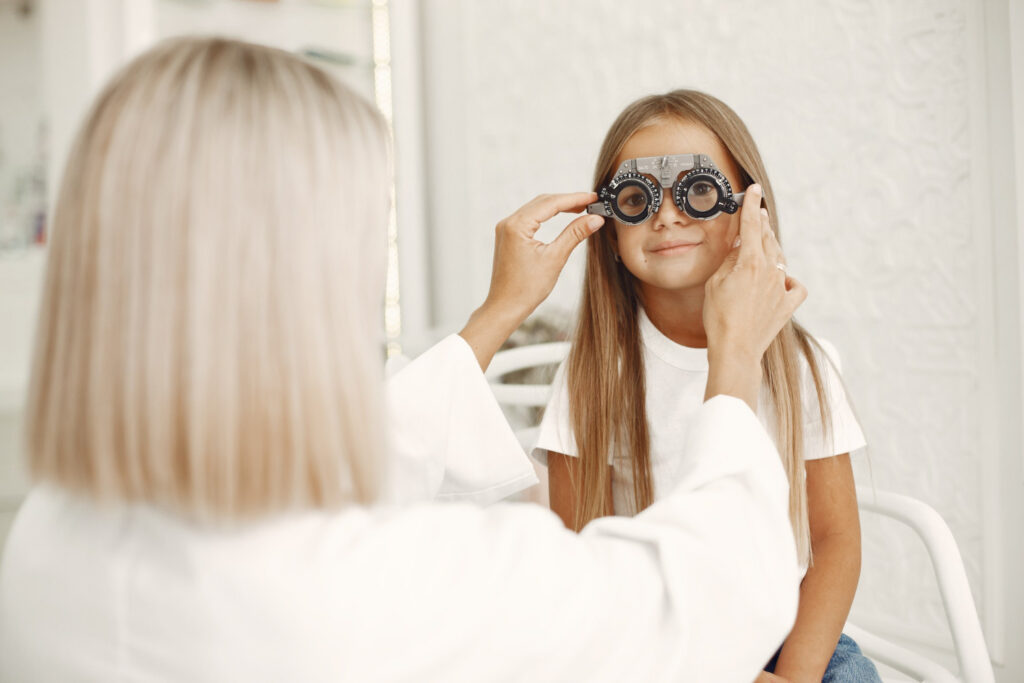
Between uniforms, stationery lists, and settling back into routine, eye checks are easy to overlook at the start of a new school term — but undiagnosed vision problems are one of the most common, and most fixable, reasons children struggle to keep up in class.
Why Kids Rarely “Tell You” Something’s Wrong
Children — especially younger ones — often don’t realise their vision isn’t normal. If they’ve always seen the world slightly blurry, they assume that’s just how everyone sees. Instead of complaining about blurry vision, the signs usually show up sideways:
- Sitting unusually close to the TV or holding books very close to the face
- Struggling to read the board and copying incorrectly
- Frequent headaches, especially after reading or screen time
- Losing their place while reading or using a finger to track lines
- Declining grades or reluctance to read, despite otherwise being capable
Why Term 3 Specifically
A few months into the school year is a useful checkpoint — teachers have had enough time to notice patterns in how a child is coping, report cards often flag concentration or reading difficulties, and there’s still runway left in the year to correct any issues before final exams and the next school year begin. It’s a natural, low-pressure moment to book a check.
It’s Not Just About the Kids
Family eye checks are also a good moment for parents to get their own vision assessed — particularly if it’s been a year or more since your last check, or if you’ve noticed any of the age-related changes common from your 40s onward, like difficulty focusing up close.
What a Family Eye Test Actually Involves
A comprehensive eye test is quick and painless — for both children and adults. It typically includes a check of visual acuity (how clearly you see at different distances), an assessment of eye coordination and focusing ability, and a look at overall eye health. For children, this can pick up on conditions like short-sightedness, long-sightedness, astigmatism, or lazy eye — all of which are far easier to manage the earlier they’re identified.
The Real Cost of Waiting
Undiagnosed vision problems don’t just affect grades — they affect confidence, participation in sport, and a child’s general enjoyment of school. The good news is that most childhood vision issues are straightforward to correct once identified, whether through glasses, contact lenses, or — for older teens and adults — assessment for procedures like LASIK further down the line.
Make Term 3 the term you tick this off the list. Book a family eye assessment and head into the rest of the school year with one less thing to worry about.